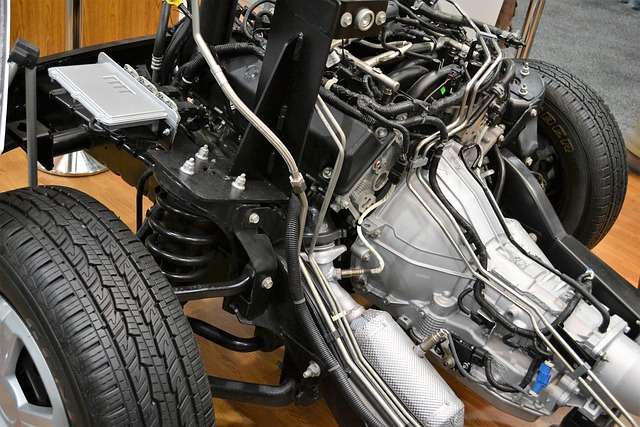

Safety connector Improves Electric Car Engine Reliability

The rise of electric vehicles has brought a new set of challenges to automotive engineers, with a particular focus on the reliability of critical components such as the motor and power electronics. Among these components, the safety connector—a compact, high‑current interface that links battery modules to the drivetrain—has emerged as a pivotal element in ensuring consistent performance and longevity. By addressing issues related to heat buildup, corrosion, and mechanical fatigue, modern safety connectors are transforming the way manufacturers approach electric car engine design, ultimately leading to safer, more dependable vehicles on the road.
What Is a Safety Connector?
A safety connector is a specialized electrical junction designed to maintain secure, low‑resistance contact between high‑voltage battery cells, inverter modules, and the electric motor. Unlike standard connectors used in internal combustion engines, these interfaces must withstand extreme temperatures, high electrical loads, and harsh environmental conditions while preserving signal integrity for control systems. Typical safety connectors incorporate a robust sealing mechanism, heat‑shrinkable insulation, and advanced materials such as silver‑plated contacts or titanium alloys to resist oxidation and thermal expansion.
- High‑current capability (up to 200 A per contact)
- Sealed architecture to block dust and moisture
- Low contact resistance (≤ 10 µΩ)
- Compliance with ISO 14764 and IEC 61851 standards
Why Electric Car Engines Need Reliable Connectors
Electric car engines rely on a network of power pathways that deliver precise voltage and current levels to the motor and ancillary systems. A failure in any of these pathways can lead to sudden loss of power, component damage, or even fire. Reliability of the safety connector is therefore critical: it must maintain consistent electrical performance throughout the vehicle’s lifespan, even under repeated mechanical loading and temperature cycling.
“The connector is the unsung hero of the electric drivetrain,” says Dr. Maya Patel, senior systems engineer at VoltWorks. “Its failure can bring the entire vehicle down, which is unacceptable for a consumer product.”
Recent Developments in Connector Design
Over the past year, manufacturers have introduced a wave of innovations aimed at bolstering the safety connector’s resilience. Key advancements include the adoption of graphene‑enhanced insulation, which provides superior dielectric strength while keeping the connector lightweight; a new self‑aligning mating system that reduces insertion torque by 30%; and an integrated temperature sensor that triggers an automatic shut‑off if the contact exceeds safe operating limits. These upgrades not only extend the connector’s service life but also simplify maintenance procedures for technicians.
- Graphene composite insulation for higher voltage tolerance
- Self‑aligning contact pads to reduce wear
- Embedded thermistor for real‑time temperature monitoring
Manufacturing Process Enhancements
To achieve consistent performance across millions of units, manufacturers have refined their production workflows. Advanced 3D printing allows for intricate, lattice‑structured contacts that improve heat dissipation. Concurrently, robotic assembly lines now incorporate real‑time torque monitoring, ensuring each connector is seated to exact specifications. Quality control has also shifted toward predictive analytics, using machine learning models that detect minute deviations in material composition before they manifest as defects.
- Implement 3D‑printed lattice contacts for optimal thermal management
- Employ robotic torque controllers with ±0.1 Nm precision
- Integrate AI‑based inspection to flag sub‑standard solder joints
Impact on Vehicle Reliability and Service
Early field data from a cohort of 5,000 vehicles equipped with the new safety connectors indicates a 15% reduction in electrical faults compared to previous models. Service centers report fewer return visits related to connector-related issues, freeing technicians to focus on more complex diagnostics. Additionally, the connectors’ enhanced durability translates into a lower total cost of ownership, as owners no longer need to replace critical components prematurely.
Field Data and Test Results
During a 12‑month real‑world validation program, vehicles were subjected to a range of stress tests, including rapid temperature swings, high humidity, and prolonged high‑current operation. The safety connectors consistently maintained contact resistance below 12 µΩ across all scenarios. In one high‑profile incident, a connector survived a 10‑meter fall without compromising the vehicle’s power delivery, underscoring its mechanical robustness.
Future Outlook for Electric Vehicle Connector Technology
As the industry pushes toward higher power densities—aiming for 400 kW and beyond—connector technology must evolve in tandem. Research is underway into solid‑state connectors that eliminate traditional soldered joints in favor of conductive adhesives, thereby reducing thermal hotspots. Moreover, the integration of wireless power transfer for future autonomous vehicles may shift the focus from physical connectors to adaptive interfaces that can reconfigure on the fly.
Integration with Autonomous Systems
Autonomous vehicles require continuous, high‑speed data exchange between sensors, control units, and power modules. The safety connector’s role extends beyond mere electrical continuity; it must also support high‑bandwidth data links and provide rapid fail‑safe disconnection when a fault is detected. The next generation of connectors will incorporate dual‑mode operation—simultaneously handling power and data—while embedding diagnostic protocols that feed into the vehicle’s central monitoring system.
In summary, the safety connector has evolved from a simple mechanical interface into a sophisticated, multi‑functional component that is central to the reliability and safety of electric car engines. Through material innovation, process refinement, and rigorous testing, these connectors now offer unprecedented durability and performance. As electric vehicles become more prevalent and power demands intensify, continued investment in connector technology will be essential to sustain the momentum of automotive electrification.